


How to Choose the Best Energy-Efficient Windows for Florida Homes
Choosing the best energy-efficient windows for your Florida home is about more than selecting an attractive frame or modern glass design. The right windows can help reduce unwanted heat gain, improve indoor comfort, and support your home’s overall energy performance.
Florida’s warm climate, intense sunlight, and high cooling demands make window selection particularly important. Older or poorly performing windows may allow excessive solar heat into your home, making your air conditioning system work harder to maintain comfortable indoor temperatures.
But with so many options available, how do you know which energy-efficient windows are right for your property?
In this guide, we explain what to look for when choosing energy-efficient windows in Florida, including Low-E glass, U-Factor, Solar Heat Gain Coefficient (SHGC), aluminum frames, thermal breaks, and other important performance features.
Whether you are replacing outdated windows or planning a new home, understanding these factors will help you make a more informed investment.
Why Energy-Efficient Windows Matter in Florida
Florida’s climate presents unique challenges for residential windows.
During much of the year, homes experience high outdoor temperatures, direct sunlight, humidity, and significant cooling demands. Windows that allow too much solar heat to enter can contribute to uncomfortable indoor temperatures and increased air conditioning use.
Choosing energy-efficient windows can help address these challenges by improving the way your home manages heat transfer and sunlight.
Some of the potential benefits include:
Reduced solar heat gain: Appropriate glass coatings can help limit the amount of heat entering your home.
Improved indoor comfort: Better-performing windows may help reduce temperature differences near windows.
More efficient cooling: Reducing unwanted heat gain can help lower the cooling demand placed on your HVAC system.
UV protection: Certain glazing options help reduce the transmission of ultraviolet radiation that can contribute to fading of interior furnishings.
Modern architectural design: Contemporary window systems can combine energy-conscious glazing with clean lines and expansive views.
The actual results depend on the window’s specifications, installation quality, home orientation, insulation, shading, and other building characteristics.
If your existing windows are showing signs of poor performance, read our guide on 7 Signs It’s Time to Replace Your Windows in Florida to understand when a replacement may be worth considering.
1. Understand the Most Important Window Energy Ratings
One of the best ways to compare energy-efficient windows is to understand the technical information provided on the National Fenestration Rating Council (NFRC) label.
The label provides standardized performance ratings that allow homeowners to compare complete window products rather than relying only on marketing descriptions.
Here are the most important ratings to understand.
U-Factor: How Well Does the Window Insulate?
U-Factor measures how quickly heat transfers through a window.
A lower U-Factor generally indicates better insulating performance, meaning less heat transfers through the window due to temperature differences between indoors and outdoors.
Although U-Factor is important in every climate, Florida homeowners should evaluate it alongside SHGC because managing solar heat gain is especially important in warm, sunny conditions.
Solar Heat Gain Coefficient (SHGC): How Much Solar Heat Enters Your Home?
SHGC measures the fraction of solar radiation that passes through a window as heat.
It is expressed as a number between 0 and 1.
A lower SHGC means the window allows less solar heat to enter your home. This can be particularly beneficial in Florida, where sunlight can significantly increase indoor temperatures.
For many Florida homes, selecting windows with an appropriately low SHGC is an important part of improving energy performance.
Visible Transmittance (VT): How Much Natural Light Comes Through?
Visible Transmittance measures how much visible light passes through the glass.
A higher VT generally means more natural daylight enters the room.
The goal is to find a balance between limiting unwanted solar heat and maintaining the natural light and views you want in your home.
Air Leakage: How Much Air Passes Through the Window?
Air Leakage measures the amount of air that passes through the window assembly under specified testing conditions.
Lower air leakage generally indicates better resistance to unwanted drafts.
Proper installation, weatherstripping, and frame design also contribute to the window’s overall performance.
Pro tip: Always compare the whole-window NFRC ratings rather than glass-only ratings. The complete assembly, including the frame and glazing, determines the product’s overall energy performance.
2. Choose Low-E Glass for Florida’s Climate
Low-E (low-emissivity) glass is one of the most important technologies to consider when selecting energy-efficient windows.
It features a thin, transparent coating designed to control the transfer of radiant heat while allowing visible light to pass through.
For Florida homes, appropriately selected Low-E coatings can help reduce unwanted solar heat gain while maintaining natural daylight.
What Are the Benefits of Low-E Glass?
Depending on the coating and glass configuration, Low-E glass can help:
Reduce the amount of solar heat entering your home.
Improve the thermal performance of insulated glazing.
Limit the transmission of certain ultraviolet rays.
Support a more comfortable indoor environment.
Reduce the cooling demand associated with unwanted heat gain.
Not all Low-E coatings perform the same way. Some are designed primarily for colder climates, while others are optimized for warm, sunny environments.
When choosing Low-E windows in Florida, ask about the specific coating and its SHGC and U-Factor ratings.
The objective is not simply to select glass labeled Low-E. It is to choose the right glazing configuration for your location, home orientation, and performance goals.
3. Consider Double-Pane and Insulated Glass Options
The number of glass panes and the space between them can influence a window’s thermal performance.
Double-pane windows consist of two glass panes separated by a sealed space. This space may contain air or an insulating gas such as argon.
Combined with appropriate Low-E coatings, insulated glass units can help reduce heat transfer compared with many older single-pane configurations.
What Should Florida Homeowners Consider?
When comparing insulated glass options, evaluate:
The number of glass panes.
The Low-E coating type.
The gas fill, if applicable.
The overall U-Factor and SHGC.
The glass thickness and configuration.
Compatibility with impact-resistant requirements, if needed.
More glass layers do not automatically mean a better window for every project. The complete product specifications should determine whether the glazing meets your energy, architectural, and safety requirements.
4. Select the Right Window Frame Material
The window frame plays an important role in overall energy performance.
Common residential frame materials include aluminum, vinyl, fiberglass, and wood. Each offers different characteristics in terms of thermal insulation, strength, maintenance, appearance, and design flexibility.
Aluminum Windows
Aluminum is widely used in contemporary residential and commercial architecture because of its structural rigidity, durability, and ability to support slim frame profiles.
Its strength makes it suitable for a variety of architectural configurations, including larger glass areas and modern sliding systems.
However, aluminum naturally conducts heat more readily than materials such as vinyl or fiberglass.
That is why thermally improved aluminum systems are an important consideration when energy efficiency is a priority.
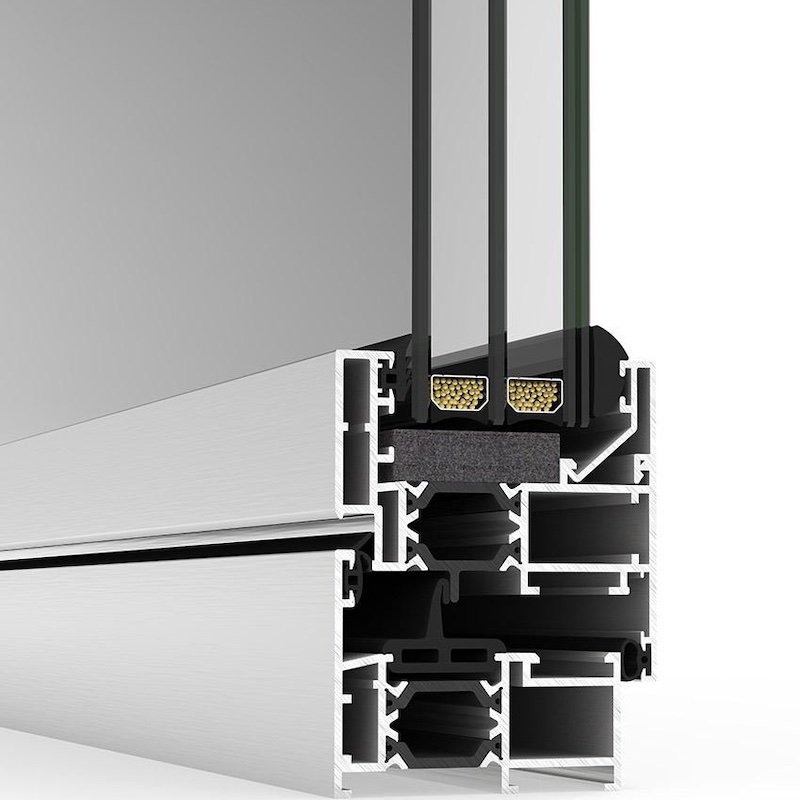
What Is a Thermal Break in Aluminum Windows?
A thermal break is an insulating component incorporated into an aluminum frame to reduce heat transfer between its exterior and interior sections.
In a thermally broken aluminum window, the insulating barrier helps interrupt the conductive path through the metal frame.
This can improve the overall thermal performance of the window compared with a similar non-thermally broken aluminum system.
For homeowners who prefer the clean architectural appearance of aluminum, thermal-break technology can offer a way to balance modern design with improved insulation.
When comparing premium aluminum windows, ask whether the specific system incorporates a thermal break and request its whole-window NFRC performance ratings.
Explore Vista Forte’s RS-65 Contemporary Casement System to discover modern aluminum window design options.
Vinyl Windows
Vinyl windows are made from PVC and naturally conduct less heat than standard aluminum frames.
They are often selected for their thermal insulating properties, low maintenance requirements, and competitive initial cost.
However, frame profiles, reinforcement, finishes, and design possibilities vary between manufacturers and product lines.
Which Frame Material Is Best?
There is no single material that is best for every home.
Vinyl can provide good thermal insulation, while aluminum offers structural rigidity and greater flexibility for certain contemporary architectural designs.
The most important factor is the performance of the complete window system, not the frame material alone.
For a more detailed comparison, read our article: Aluminum vs. Vinyl Windows in Florida: Which Is Better for Your Home?
5. Pay Attention to Window Orientation and Sun Exposure
Not every window in your home receives the same amount of sunlight.
The direction each window faces can influence the amount of solar heat entering your home throughout the day.
For example:
West-facing windows: Often receive intense afternoon sunlight, making solar heat control particularly important.
East-facing windows: May receive significant morning sunlight.
South-facing windows: Can receive substantial sunlight depending on the property’s design, roof overhangs, and surrounding shade.
North-facing windows: Generally receive less direct sunlight in many Florida locations.
When planning a window replacement project, consider the orientation of each opening and the amount of direct sunlight it receives.
The right combination of SHGC, visible transmittance, exterior shading, and glazing can help improve overall comfort.
A window specialist can help evaluate different configurations according to your home’s architecture and exposure.

6. Look for ENERGY STAR Certification and NFRC Ratings
ENERGY STAR certification is a useful starting point when comparing energy-efficient residential windows.
It identifies products that meet established energy performance criteria for their designated climate zones.
Florida is classified within the Southern climate zone under ENERGY STAR’s residential window criteria.
For ENERGY STAR Version 7.0, the Southern climate zone window criteria are:
U-Factor: 0.32 or lower.
SHGC: 0.23 or lower.
These are ENERGY STAR certification criteria, not universal minimum requirements for every Florida building project.
It is also important to check the exact county and product certification rather than assuming that every window marketed as energy-efficient meets these values.
The NFRC label provides a standardized way to compare the energy performance of different window products.
When requesting a quote, ask the supplier to provide the NFRC ratings for the exact window configuration being considered.
7. Do Not Overlook Installation Quality
Even a highly energy-efficient window may underperform if it is not installed correctly.
Gaps, inadequate sealing, improper flashing, and installation errors can contribute to air and water infiltration.
For this reason, installation quality is an essential part of any window replacement project.
Before moving forward, consider:
Whether the existing window opening needs repairs.
How the new frame will be secured.
Whether the flashing and weather barriers are appropriate.
How the perimeter will be sealed.
Whether installation follows the manufacturer’s instructions.
Whether the complete assembly meets applicable local requirements.
Proper installation helps the window perform as intended and supports the long-term performance of the building envelope.
8. Consider Impact-Resistant Windows for Florida Homes
Energy efficiency is only one part of selecting the right windows for a Florida property.
Homeowners should also consider the weather protection requirements associated with their location.
Impact-resistant windows are designed with specialized glazing and frame configurations to resist specified wind pressures and windborne debris impacts when properly tested, approved, and installed.
Some impact-resistant glazing options can also incorporate Low-E coatings and insulated glass configurations.
However, impact resistance and energy efficiency are separate performance characteristics. A window should be evaluated for both.
When considering impact-resistant windows, verify:
Applicable product approvals.
Design pressure ratings.
Glass and frame specifications.
Applicable windborne debris requirements.
Installation and anchoring instructions.
NFRC energy performance ratings.
The best choice is a complete window system that meets the requirements of your property while supporting your desired comfort, design, and energy performance.
To understand the differences between available storm protection options, read our guide: Impact Windows vs. Hurricane Shutters in Florida: Which Is Better?
9. How to Compare Energy-Efficient Windows Before Buying
Before choosing new windows, it is important to compare the actual product specifications rather than relying only on appearance or sales descriptions.
Use this checklist when evaluating different options:
| What to Compare | What to Look For |
|---|---|
| U-Factor | A lower value generally means better insulation |
| SHGC | A lower value allows less solar heat into the home |
| Visible Transmittance | Helps compare natural light transmission |
| Air Leakage | Lower values generally indicate less air infiltration |
| Glass Type | Consider Low-E coatings and insulated glazing |
| Frame Design | Evaluate material, thermal breaks, and construction |
| Impact Performance | Verify approved configurations when required |
| Installation | Confirm appropriate installation and sealing methods |
| Warranty | Review coverage for frames, glass, finishes, and hardware |
A professional quote should identify the product being proposed and provide the specifications needed to compare it with other options.
If you are considering replacing your existing windows, our article How Much Do Impact Windows Cost in Tampa Bay? can help you understand some of the factors that influence window replacement costs.
10. Discover Premium Aluminum Window Solutions with Vista Forte
At Vista Forte, we believe modern windows should combine architectural design, carefully selected materials, and performance suited to the needs of each project.
Our premium aluminum window and door systems bring European design influences to residential and commercial projects in Florida.
For homeowners seeking contemporary aesthetics, aluminum offers the opportunity to create clean architectural lines, slim profiles, and expansive glass areas.
When selecting a window system, we encourage homeowners to look beyond appearance and evaluate the technical specifications that influence energy performance, durability, and comfort.
Explore our residential window solutions:
Casement Windows: Contemporary designs for modern residential spaces.
Sliding Windows: Functional configurations with clean architectural lines.
Single Hung Windows: A versatile option for different residential applications.
Picture Windows: Fixed glass configurations that maximize views and natural light.
Awning Windows: A contemporary option for controlled ventilation.
Whether you are planning a new home, renovating an existing property, or upgrading outdated windows, Vista Forte can help you explore premium aluminum solutions for your project.
Frequently Asked Questions About Energy-Efficient Windows in Florida
The best windows depend on your home's location, orientation, and performance requirements. Look for appropriately low SHGC values, good U-Factor ratings, quality Low-E glazing, and properly designed frames. ENERGY STAR certification and NFRC ratings can help you compare products.
A lower SHGC generally helps reduce unwanted solar heat gain. Under ENERGY STAR Version 7.0, the Southern climate zone criteria for certified windows include an SHGC of 0.23 or lower. Always verify the applicable certification and specifications for the exact product.
Low-E windows can be a valuable option because their coatings help control heat transfer and solar energy. The right coating can help reduce unwanted heat gain while maintaining natural light. Performance depends on the specific glazing configuration.
Aluminum windows can provide good energy performance when designed with appropriate thermal improvements, such as thermal breaks, and paired with suitable glazing. Always compare whole-window NFRC ratings rather than assuming all aluminum windows perform the same way.
U-Factor measures how quickly heat transfers through a window. A lower value indicates better insulating performance. SHGC measures how much solar heat enters through the window. A lower value means less solar heat is transmitted.
They may help reduce cooling demands by limiting unwanted heat gain and air infiltration. Actual savings depend on the existing windows, replacement specifications, installation, insulation, home orientation, shading, and HVAC system.
Some impact-resistant window systems incorporate energy-efficient glazing, including Low-E coatings and insulated glass configurations. However, impact resistance and energy performance are separate characteristics, so both should be verified.
Double-pane insulated glass can provide better thermal performance than many traditional single-pane configurations. The actual results depend on the glass coatings, spacer, gas fill, frame, and overall window design.
Thermal breaks help reduce heat transfer through aluminum frames. This can improve the thermal performance of an aluminum window system, making thermally broken designs an important option to evaluate for homes in warm climates.
Prices depend on window dimensions, frame material, glass specifications, impact ratings, finishes, hardware, and installation requirements. The best way to compare costs is to request project-specific quotes with complete product specifications.
Ready to Upgrade Your Windows?
Choosing the right energy-efficient windows can make an important difference in your home's comfort, appearance, and overall performance.
If you are considering new windows for your Florida property, explore the possibilities of premium aluminum systems with Vista Forte.